
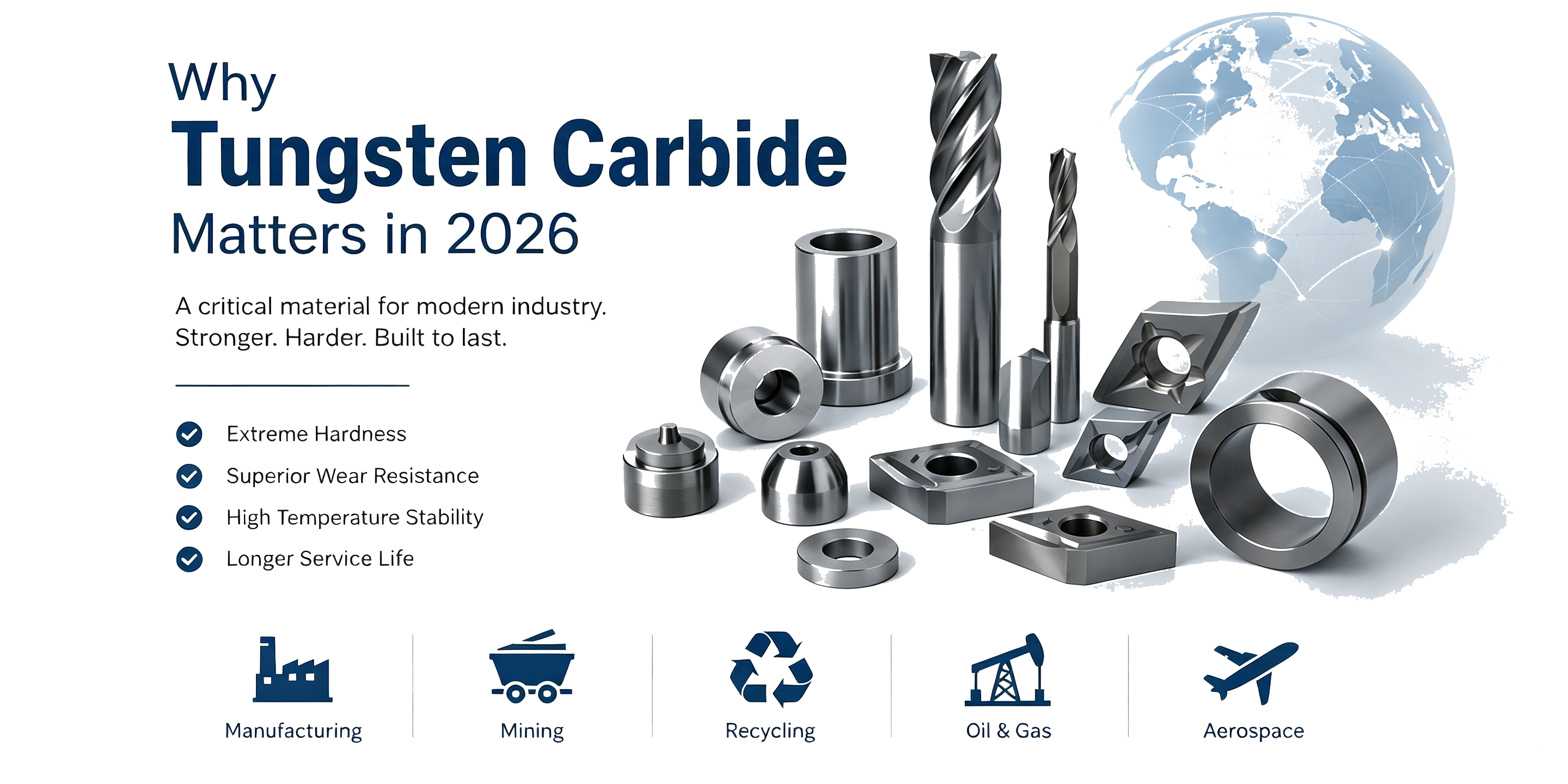
Over the past year, tungsten carbide has become one of the most talked-about engineering materials in the global manufacturing industry.
Record-high tungsten prices, tightening global supply chains, and increasing demand from aerospace, mining, recycling, semiconductor, and precision manufacturing industries have pushed tungsten carbide into the spotlight. Reuters and several industry organizations report that tungsten prices reached historic highs in early 2026 as inventories tightened and export restrictions reshaped global supply. At the same time, Europe and North America are accelerating carbide recycling programs to reduce dependence on primary raw materials.
So, what exactly is tungsten carbide, and why has it become such a strategic material?
Let's explore.
What Is Tungsten Carbide?
Tungsten carbide (WC) is a compound made by combining tungsten and carbon atoms. It is usually bonded with cobalt or nickel to produce cemented carbide, creating one of the hardest industrial materials available.
Compared with conventional tool steels, tungsten carbide offers:
Exceptional hardness
Outstanding wear resistance
Excellent compressive strength
High-temperature stability
Long service life
Superior corrosion resistance (depending on binder)
These properties make tungsten carbide the preferred material for demanding industrial applications where conventional steel would wear out quickly.
Why Is Tungsten Carbide in the News?
The growing attention surrounding tungsten carbide isn't simply because it's a hard material—it has become a strategic industrial resource.
Several major developments have reshaped the market:
Record-High Tungsten Prices
During early 2026, global tungsten prices climbed to record levels due to:
Tight mining output
Strong industrial demand
Supply chain disruptions
Export controls on critical tungsten materials
These factors have increased production costs across the entire carbide industry.
Supply Chain Security
China remains the dominant producer of tungsten materials worldwide.
As governments increasingly classify tungsten as a critical mineral, manufacturers in Europe, North America, and Asia are actively diversifying their supply chains and seeking reliable long-term partners. Recycling, alternative sourcing, and regional production have become strategic priorities.
Rapid Growth in Carbide Recycling
Instead of relying solely on newly mined tungsten, manufacturers are investing heavily in tungsten carbide recycling.
Modern recycling technologies recover valuable tungsten from:
Used carbide inserts
End mills
Mining tools
Wear parts
Industrial scrap
Recovered tungsten can be reprocessed into high-quality carbide powders, reducing environmental impact while improving supply security.
Why Industries Choose Tungsten Carbide
Manufacturing
CNC machining depends heavily on tungsten carbide cutting tools because they maintain sharp cutting edges even at high temperatures.
Typical products include:
End mills
Drill bits
Inserts
Reamers
Burrs
Mining
Mining equipment operates in extremely abrasive environments.
Tungsten carbide wear parts provide longer service life for:
Mining picks
Drill buttons
Crusher components
Wear plates
Recycling Industry
Industrial shredders process:
Plastic
Metal
Wood
Tires
Electronic waste
Carbide shredder blades significantly outperform conventional steel blades in wear resistance and operating life.
Oil & Gas
Tungsten carbide is widely used for:
Valve seats
Nozzles
Flow control components
Drilling tools
Its excellent resistance to erosion and corrosion extends equipment life in harsh environments.
Aerospace & Precision Engineering
The aerospace sector increasingly relies on carbide tooling for machining:
Titanium alloys
Nickel-based superalloys
Stainless steel
Composite materials
As aircraft manufacturers pursue lighter and stronger materials, carbide tools remain essential for precision machining.
Advantages of Tungsten Carbide Products
Compared with traditional steel components, tungsten carbide products offer:
Property,Tungsten Carbide,Tool Steel
Hardness,Extremely High,Medium
Wear Resistance,Excellent,Moderate
Heat Resistance,Excellent,Good
Service Life,Long,Shorter
Maintenance Frequency,Low,Higher
Although carbide components typically have a higher initial cost, their longer lifespan often results in a significantly lower total cost of ownership.
The Future of Tungsten Carbide
Industry analysts believe demand for tungsten carbide will continue growing because of expansion in:
Electric vehicle manufacturing
Renewable energy
Precision machining
Semiconductor production
Industrial automation
Recycling equipment
Infrastructure projects
At the same time, companies are placing greater emphasis on:
Sustainable sourcing
Circular manufacturing
Carbide recycling
Supply chain resilience
These trends are expected to shape the tungsten carbide market for years to come.
Choosing the Right Tungsten Carbide Manufacturer
When selecting a tungsten carbide manufacturer, buyers should evaluate:
Material grade selection
Production capability
Precision machining expertise
Quality management system
OEM & ODM services
Custom design support
Delivery reliability
Recycling and sustainability initiatives
Working with an experienced manufacturer helps ensure consistent product quality, reduced downtime, and lower long-term operating costs.
Final Thoughts
As global industries continue to prioritize durability, efficiency, and sustainable manufacturing, tungsten carbide has become far more than a traditional engineering material—it is now a critical component of modern industrial supply chains.
From tungsten carbide cutting tools and wear parts to advanced recycling solutions, manufacturers are investing in carbide technologies that improve productivity while supporting long-term resource security.
Whether you're sourcing custom tungsten carbide parts, industrial tooling, or wear-resistant components, understanding today's market trends can help you make better purchasing decisions and stay competitive in a rapidly evolving manufacturing landscape.