
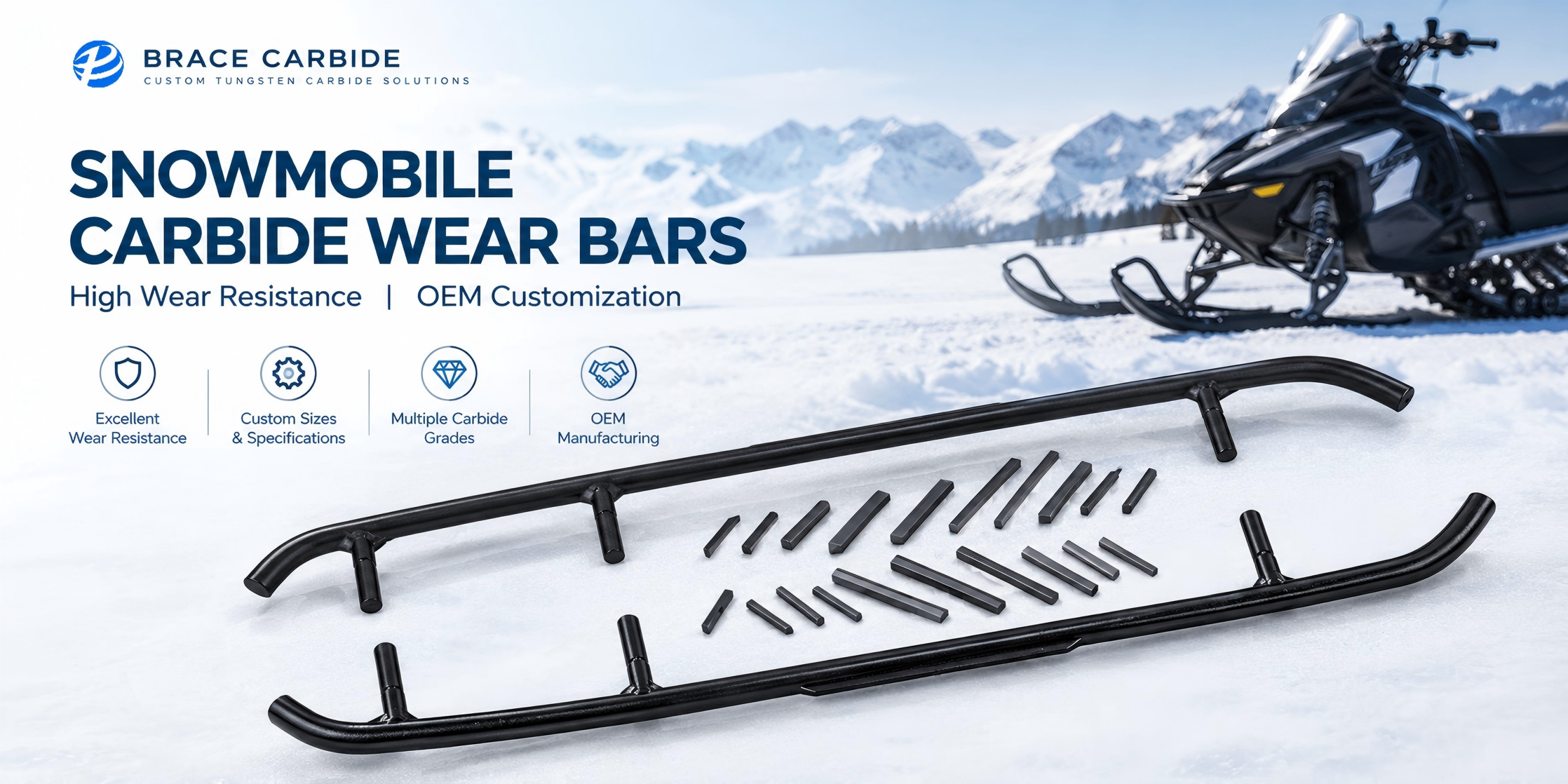
The True Cost of a Wear Component Goes Beyond Its Purchase Price
When evaluating industrial wear parts, the purchase price is only one part of the total cost.
A component that costs less initially may require more frequent replacement if it is not suitable for the actual working environment.
Additional costs may include:
Replacement labor
Equipment downtime
Production interruptions
Maintenance requirements
Reduced operating efficiency
Increased spare-parts consumption
For continuously operating industrial equipment, unexpected downtime can sometimes have a greater financial impact than the price difference between two components.
For this reason, industrial buyers increasingly focus on total cost of ownership rather than simply selecting the lowest-priced option.
Why Standard Components Are Not Always the Best Solution
Standard components are designed to meet general application requirements.
However, industrial operating conditions can vary significantly.
Different applications may involve:
Different materials being processed
Different levels of abrasion
High-impact conditions
Different operating speeds
Heavy loads
Continuous operation
Specific dimensional requirements
A standard component may perform adequately in one environment but provide limited service life in another.
Customized tungsten carbide components can be designed with the actual application in mind.
This allows manufacturers to consider the most important performance requirements before production.
1. The Right Carbide Grade Can Improve Performance
One of the most important factors in carbide component performance is material selection.
Different tungsten carbide grades provide different balances between:
Hardness
Wear resistance
Toughness
Impact resistance
A higher-hardness grade may provide excellent resistance to abrasion, while a tougher grade may perform better under heavy impact conditions.
Using an unsuitable grade can result in unnecessary wear, cracking, chipping, or premature failure.
By selecting a carbide grade based on the actual working environment, manufacturers can help customers achieve a better balance between performance and material cost.
The goal is not always to use the hardest carbide available.
The goal is to select the most suitable carbide solution for the application.
2. Customized Dimensions Can Reduce Unnecessary Material Costs
Product dimensions can also influence both performance and manufacturing costs.
In some applications, a standard component may contain more material than necessary. In others, its dimensions may not provide sufficient strength or wear resistance.
Customized components can be manufactured according to:
Customer drawings
Equipment requirements
Application dimensions
Installation conditions
Performance requirements
Optimizing the component design can help ensure that material is used more effectively.
This is particularly important for high-value materials such as tungsten carbide.
A properly designed component may provide the required performance without unnecessary material consumption.
3. Product Geometry Can Influence Service Life
The shape and geometry of a component can significantly affect how it performs during operation.
Factors such as:
Cutting angles
Edge design
Contact surfaces
Thickness
Stress distribution
Material flow
can all influence wear behavior.
For example, industrial cutting and shredding applications may require specific geometries to improve cutting efficiency and reduce localized stress.
Wear parts may also require optimized surfaces to distribute pressure more effectively.
Customized product geometry allows manufacturers to develop components based on the actual working conditions rather than relying entirely on general-purpose designs.
4. Longer Service Life Can Reduce Replacement Frequency
One of the most direct ways customized carbide components can reduce operating costs is by extending service life.
A component that lasts longer may help reduce:
Replacement frequency
Maintenance requirements
Spare-parts inventory
Equipment downtime
This is especially important in applications where replacing a component requires significant labor or machine shutdown time.
For industrial customers, a longer-lasting component may provide greater value even if its initial purchase price is higher.
The key consideration is the overall cost during the component's operating life.
5. Reduced Downtime Can Improve Production Efficiency
Unexpected equipment downtime can create significant operational costs.
When a critical wear component fails earlier than expected, production may need to stop while the part is replaced.
A more suitable carbide solution can help improve component reliability and make maintenance intervals more predictable.
This allows companies to better plan:
Equipment maintenance
Spare-parts requirements
Production schedules
Component replacement cycles
For high-volume industrial operations, improving equipment availability can provide significant long-term benefits.
Applications That Can Benefit From Customized Carbide Components
Customized tungsten carbide solutions can be valuable in a wide range of industrial applications.
These include:
Tungsten Carbide Wear Parts
Carbide wear parts are commonly used in environments involving severe abrasion and continuous material contact.
The correct material grade and component design can help improve wear resistance and service life.
Industrial Shredder Blades
Shredding applications can involve different materials, impact conditions, and cutting requirements.
Customized carbide solutions can help manufacturers select suitable materials and designs based on the specific shredding application.
Cutting Components
Cutting components often require a balance between edge performance, wear resistance, and toughness.
Customized geometry and material selection can help improve cutting performance.
Mining and Heavy-Duty Applications
Mining and heavy industrial environments can involve extreme abrasion and impact.
Carbide components can be designed according to specific operating conditions and equipment requirements.
OEM Carbide Components
OEM manufacturers may require carbide components produced according to drawings, technical specifications, and application requirements.
Customization allows components to be integrated into specific equipment designs.
How Customization Supports Better Long-Term Procurement Decisions
Industrial buyers should consider more than the initial price when purchasing tungsten carbide components.
Important factors include:
Expected service life
Material performance
Application requirements
Replacement frequency
Production downtime
Supplier reliability
Customization capability
A component that performs reliably for a longer period may provide better overall value than a cheaper alternative requiring frequent replacement.
For this reason, communication between the customer and manufacturer is an important part of developing a suitable carbide solution.
Understanding the application environment can help manufacturers recommend appropriate materials and product designs.
Customized Tungsten Carbide Solutions From Brace Carbide
At Brace Carbide, we provide customized tungsten carbide and cemented carbide solutions for industrial applications.
Our products and capabilities include:
Tungsten carbide wear parts
Industrial shredder blades
Customized carbide components
OEM and ODM manufacturing
Precision machining and grinding
We work according to customer drawings, dimensions, material requirements, and application conditions.
By understanding how a component will be used, we can help customers identify suitable carbide materials and manufacturing solutions.
Our goal is to provide components designed for reliable performance and long-term industrial use.
Conclusion
The lowest-priced component is not always the most economical choice.
For industrial applications involving wear, impact, and demanding operating conditions, the total cost of ownership should be considered.
Customized tungsten carbide components can help improve performance by optimizing:
Material grade
Wear resistance
Toughness
Product dimensions
Component geometry
Manufacturing requirements
By selecting the right carbide solution for the actual application, industrial buyers may be able to extend service life, reduce replacement frequency, minimize downtime, and improve long-term operating efficiency.
At Brace Carbide, we continue to provide customized tungsten carbide solutions designed around the requirements of different industrial applications.
FAQ
Why can customized tungsten carbide components reduce operating costs?
Customized components can be designed according to specific working conditions, helping improve service life, reduce replacement frequency, and minimize equipment downtime.
Are customized carbide components always more expensive?
Not necessarily. Although customized products may involve different manufacturing requirements, they can provide better long-term value by improving performance and reducing replacement costs.
How do I choose the right tungsten carbide grade?
The right grade depends on factors such as abrasion, impact conditions, operating environment, load requirements, and expected service life.
What information is needed for a customized carbide component?
Customers can provide drawings, dimensions, material requirements, application details, and other technical specifications to help determine a suitable solution.
Can Brace Carbide manufacture OEM tungsten carbide components?
Yes. Brace Carbide provides customized OEM and ODM tungsten carbide and cemented carbide components according to customer requirements and drawings.